

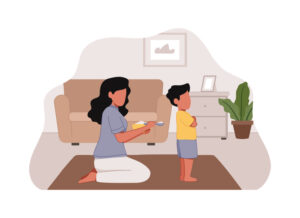
Picture this: you’re in the checkout line at a grocery store. A toddler is crying for a candy bar, and instead of setting a firm boundary, the parent kneels down, smiles, and negotiates… and negotiates… and negotiates. No clear “no,” just endless compromise.
It’s a familiar scene—and one that sparks quiet judgment. Not just toward the child’s behavior, but toward the parent’s response. You might catch yourself thinking, Why aren’t they setting limits? or even, I’d handle that differently.
But these moments raise a deeper question: why do we judge parenting styles based on what we see in a child’s behavior?
For many of us, it’s personal. Maybe we’re parents ourselves. Maybe we remember how we were raised. Or maybe we understand, instinctively, that without structure, things can unravel quickly. The real difference often comes down to one deceptively simple challenge: balancing warmth with guidance. That’s a lot easier said than done.
What Is Permissive Parenting?
Permissive parenting—sometimes called passive parenting—is rooted in love, but short on limits. These parents are emotionally warm, attentive, and deeply caring. They want harmony at home and often go out of their way to avoid conflict. But in doing so, they may struggle to enforce rules or maintain consistent boundaries.
This can show up as:
- Unlimited screen time
- Skipped chores
- Ignoring disrespectful behavior
- Giving in to avoid meltdowns
Over time, children raised this way may feel unsure of what’s expected of them—or where the boundaries even are.
The “Cool Parent”
Pop culture has captured this dynamic before. Think of Regina George’s mom in Mean Girls—the parent who wants to be liked more than respected. She’s warm, permissive, and boundary-free. It’s exaggerated for humor, but the pattern is real. Today, social media has amplified it. Platforms like TikTok and Instagram often highlight calm, child-led parenting moments—without showing the less glamorous (but essential) parts: consistency, discipline, and follow-through.
The result? A curated version of parenting that looks peaceful, but skips the structure children need.
The Rise of Permissive Parenting
Several forces are pushing parents in this direction:
1. Social Media Influence
Gentle, conflict-free parenting clips are highly shareable—but incomplete. They rarely show what happens after the camera stops rolling.
2. Fear of Being “Too Harsh”
Many parents raised in strict households are determined not to repeat that experience. In trying to avoid control, they may swing too far toward leniency.
3. Intergenerational Patterns
Parenting habits—both healthy and unhealthy—often pass down quietly from one generation to the next.
4. Mental Health Strain
Stress, anxiety, and burnout can make consistency incredibly difficult. Sometimes it’s not philosophy—it’s exhaustion.
5. Misunderstanding Gentle Parenting
Gentle parenting isn’t the absence of limits. But it’s often mistaken for exactly that.
What Attachment Science Tells Us
Psychologist Mary Ainsworth showed how early caregiving shapes a child’s sense of security. Her work identified patterns like:
- Secure attachment: built through consistent, reliable care
- Anxious (ambivalent) attachment: formed through inconsistency
- Avoidant attachment: linked to emotional distance
Later, psychologist Diana Baumrind outlined four parenting styles based on two factors: responsiveness (warmth) and demandingness (structure).
- Authoritative: high warmth, high structure
- Authoritarian: low warmth, high structure
- Permissive: high warmth, low structure
- Neglectful: low warmth, low structure
Permissive parenting sits in a tricky spot: it offers emotional support but lacks consistency. And that inconsistency can lead to insecurity—even in a loving home.
When Love Lacks Structure
Imagine a child who resists going to school. On tough mornings, the parent allows them to stay home to avoid distress. It feels compassionate—and it is. But over time, the routine becomes unpredictable. The child learns: Sometimes I go, sometimes I don’t. Instead of feeling secure, they feel uncertain.
That’s the paradox: comfort without consistency can create anxiety, not relieve it.
The Long-Term Impact
Without clear boundaries, children may struggle to develop key life skills. Over time, this can lead to:
- Poor self-control and impulse regulation
- Difficulty handling frustration
- Anxiety or overdependence
- Challenges in relationships
Children rely on predictability. It helps them feel safe, capable, and grounded. When expectations shift daily—or depend on a parent’s mood—kids don’t just feel confused. They lose the chance to build an internal compass that says, I know what to do. I can handle this.
What Kids Actually Need
Most permissive parents aren’t careless—they’re overwhelmed, thoughtful, and trying their best. The goal isn’t to become strict. It’s to become consistent.

That balance looks like:
- Setting clear, age-appropriate expectations
- Following through, even when it’s uncomfortable
- Validating emotions without removing limits
- Modeling responsibility and calm behavior
- Staying emotionally present
Because boundaries aren’t punishment. They’re protection. They tell a child: You’re safe. I’ve got you. And I’m guiding you.
Bottom Line
Love is essential—but it’s not enough on its own. Children thrive when warmth is paired with structure. That’s what builds confidence, resilience, and emotional security. Research—and real life—point to the same conclusion: the most effective parenting style isn’t the harshest or the softest. It’s the one that blends both. Love them deeply. Guide them consistently. Children don’t just need affection—they need leadership, too.